
Activity Books and Printable Activities for Kids, by Age and Subject
What actually works for kids from toddler through age 12, by age and subject, from someone who illustrates these pages for a living. No ads, no broken links, no blurry scans. The free multiplication printable is ready now, in A4 and A5, with more added as I build them.
Every list of free printable activities online seems to lead to the same place: recycled sites covered in ads, broken download links, or low-quality scans that print blurry no matter how many times you adjust the settings. I built this page because I got tired of that too, both as an illustrator who makes activity pages for a living and as a father hunting for something my own son could actually use. Everything here is designed by one working illustrator, not scraped from somewhere else. No ads. No broken links. No blurry scans.
I do this because every illustration project I take on also helps fund development of autism-friendly educational apps for kids who learn differently. Read about the mission.

What Printable Activities Are Right for My Child's Age?
Quick Answer: The right activity depends on developmental stage more than grade level. Toddlers and preschoolers do best with counting, matching, and simple mazes. Kids six to eight are ready for word searches, comprehension questions, and color-by-number. Nine to twelve year olds, especially ten year olds (the single strongest age signal this page gets), want deeper comprehension, creative writing, and research-style prompts. Below is what actually works at each stage and why, with real examples you can print today.
Ages 3 to 5
At three, four, and five years old, kids are building the skills that come before reading and writing, not reading and writing itself. A four-year-old is usually ready for counting up to ten, matching shapes or shadows, and a simple connect-the-dots with wide-spaced numbers. A five-year-old can usually handle letter tracing, sorting objects by category, and a maze with one clear path. Coloring pages work at every point in this range, because the skill required is holding a crayon steady, not identifying a number or a letter.
The activities that hold a preschooler’s attention longest are the ones with a visible reward. Finishing the dot-to-dot reveals a picture, sorting the pile correctly means the game is done. Spot-the-difference works well here too. Most kids this age really enjoy hunting for the handful of things that changed between two nearly identical pictures. Keep sessions short. Five to ten minutes is realistic for this age group, and pushing past that turns a fun activity into a fight nobody wins.
Sit with your three, four, or five-year-old for the first few pages rather than handing over a stack and walking away. At this age the activity is partly the page and partly the company, a parent pointing at the next number or naming the shape out loud does more for the skill being practiced than the worksheet alone. Praise finishing the page, not doing it perfectly. A wobbly line on a maze or a coloring page outside the lines is still a completed activity, and treating it that way keeps a young child willing to try the next one.
Ages 6 to 8
Six and seven year olds have usually started reading on their own, so this is where comprehension questions and word searches start to work. A six-year-old can typically answer two or three simple questions about a short story, who was the main character, what happened first, while a seven-year-old can usually handle a slightly longer passage and a word search built from eight to ten words. Writing prompts start to make sense here too, even if the answer is only a sentence or two long.
Color-by-number and drawing prompts stay popular through this whole band. They give a child something to make rather than just something to answer. Mazes get more complex, with multiple paths instead of one clear route. If your child is eight and reading confidently, you can usually move up into the next band’s comprehension activities a little early. Age is a starting point here, not a rule you have to follow exactly.
Reading the comprehension questions out loud helps a six or seven-year-old more than handing over a silent worksheet, especially early in this band before independent reading is fully comfortable. Once your child answers, ask one follow-up question that isn’t on the page, why did the character do that, what would you have done instead. That single extra question turns a fill-in-the-blank exercise into a real conversation about the story, and it’s the same technique classroom teachers use to stretch a worksheet into an actual comprehension lesson.
Ages 9 to 12, Starting With Age 10
If I had to bet on which single age is searching this page right now, I would bet on ten year olds. It is by far the strongest single age signal this page gets. Ten is an interesting age for activity pages because interests start to split more by the individual child than by age alone, a ten-year-old girl and a ten-year-old boy on this page are often looking for different things, one might want a research project about animals, the other a denser maze or puzzle page. Deep comprehension questions, creative writing prompts, and character analysis activities all work well at this age.
Nine, eleven, and twelve year olds follow the same general activity types as ten, just with the difficulty turned up or down. A nine-year-old usually still wants shorter writing prompts and more guided comprehension questions, while an eleven or twelve-year-old can handle a real research or investigation project, look up three facts about something and write them down, that kind of activity. Journaling and reflection prompts work across this whole band for kids who like writing about themselves rather than about a story.
Kids in this band generally want to work independently, and pushing to check every answer can backfire at exactly the age where independence matters most. A journaling or reflection prompt in particular works best read only if your child offers to share it, treat it the way you would a diary rather than a homework sheet to mark. Research and investigation prompts are the one exception worth checking in on, since a nine to twelve-year-old often needs a parent’s help finding a source or two, not doing the writing for them.
Age Band | Where They’re At | What Works Best |
|---|---|---|
Ages 3 to 5 | Pre-reading skills, short attention spans, big visible rewards | Coloring, counting, matching, spot-the-difference, connect-the-dots, sorting, simple mazes |
Ages 6 to 8 | Reading independently, ready for short comprehension and writing | Word searches, comprehension questions, color-by-number, drawing and writing prompts, multi-path mazes |
Age 9 to 12+ | Interests split by the individual child, ready for real depth | Deep comprehension, creative writing, character analysis, research projects, journaling |
What Printable Activities Are Available by Subject?
Quick Answer: Start with the free multiplication printable, the one download on this page ready to go today, in both A4 and A5. After that, coloring pages are the single most requested activity type across every age I work with, followed by dot-to-dot, handwriting practice, and general math printables.
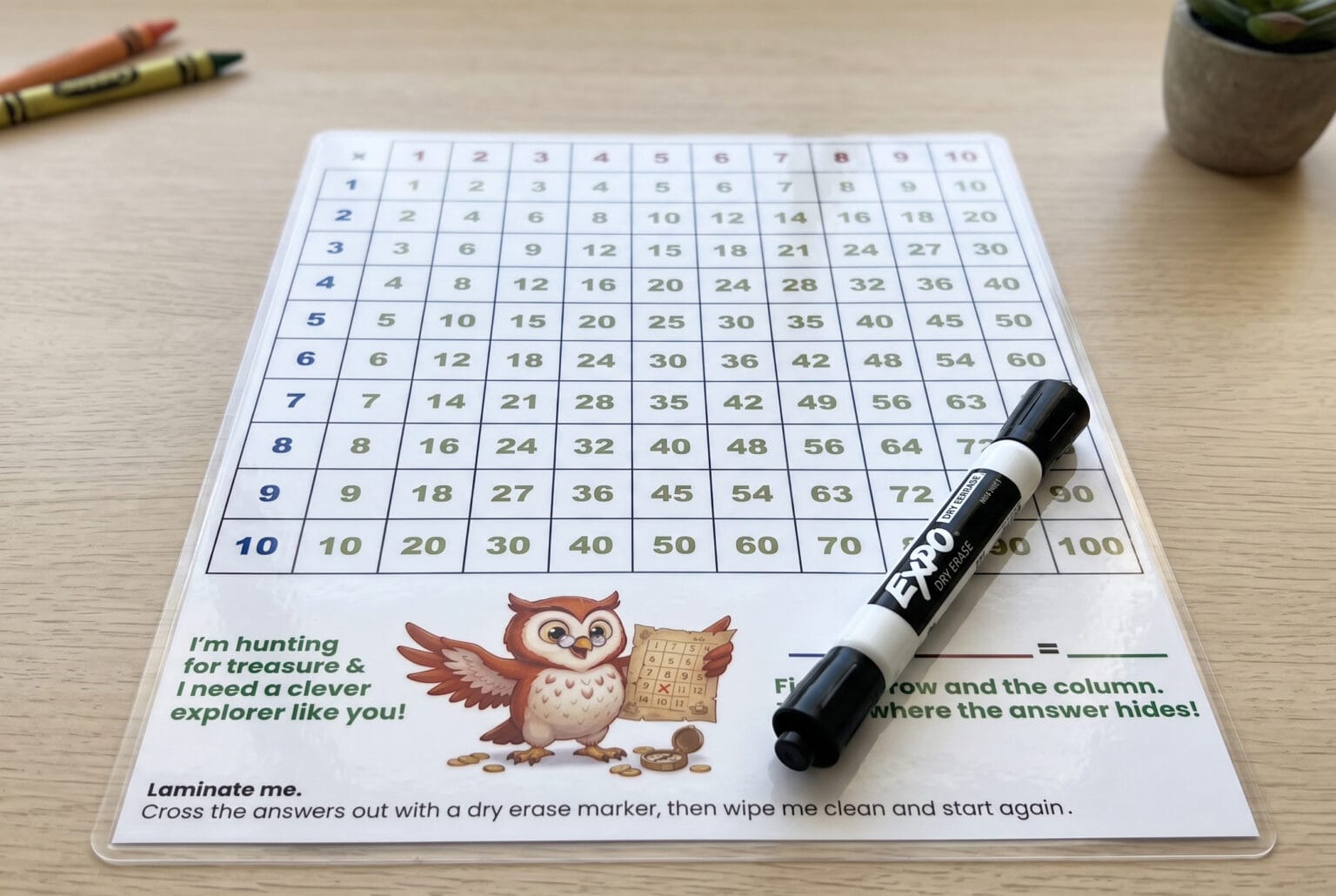
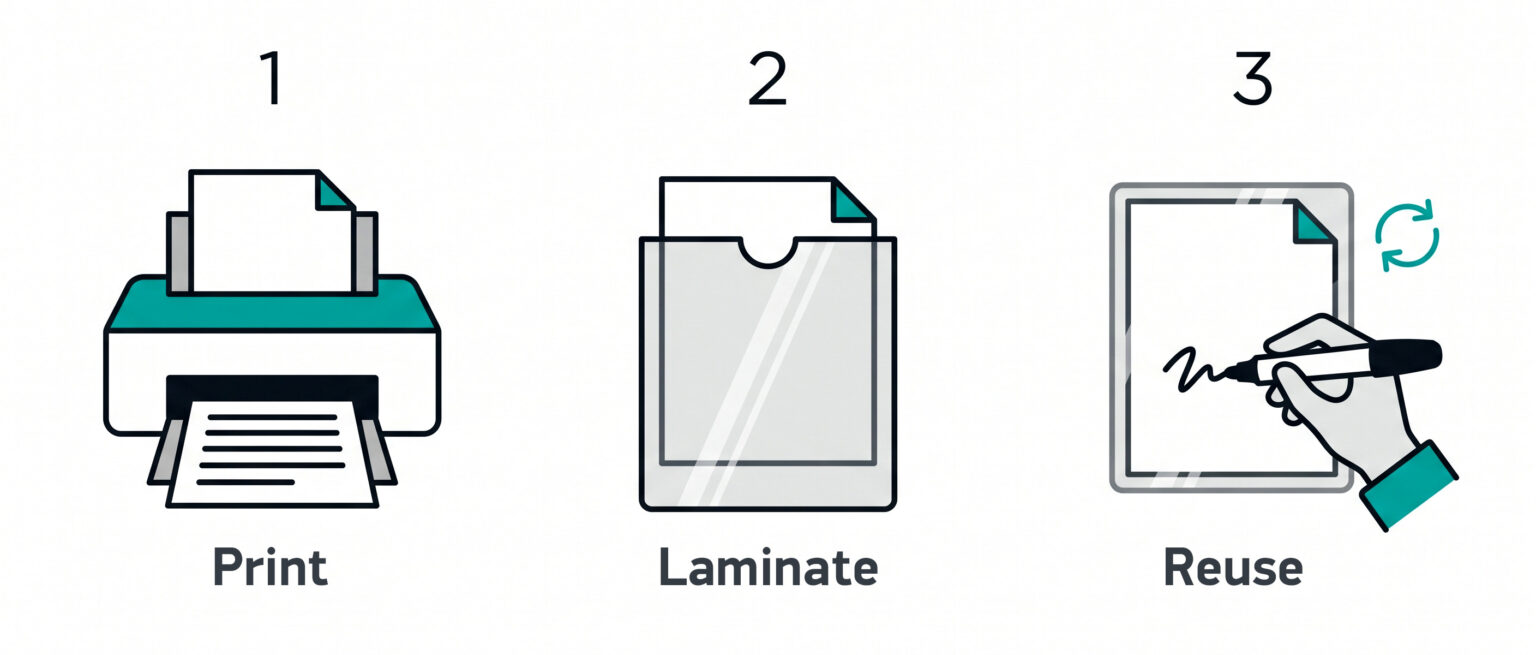
The multiplication printable is the first thing I would print from this page. It comes in both A4 and A5, so it works whether your printer defaults to US letter-adjacent settings or you want a smaller version for a folder or binder. Enter your email and I will send you both sizes right away, along with any new printables as I build them. Print it, then slide it into a plastic sleeve or laminate it. A dry-erase marker turns one page into something you can reuse for months instead of once, wipe it clean and your child does the same sheet again the next week. It’s a small detail, but printing in two sizes and building in a reusable format is the kind of thing that only occurs to someone who actually prints and uses these pages at home, not someone assembling a list of links.
Get the Free Multiplication Printable
Available now in A4 and A5. Enter your email and I’ll send both sizes right away, plus a note when the next printable is ready.
I keep my own printables sorted in a simple binder with dividers by age band, one section per child if you have more than one, rather than a loose pile that gets lost in a drawer. Laminate whichever pages your child ends up using more than once, the multiplication printable is a good candidate, and leave everything else as single-use sheets. It costs almost nothing and it means you’re not hunting for a printable you already have on the day you need it.
Coloring pages are the one activity type that shows up at almost every age. In my own experience building activity pages for children’s books, they are the single most requested type across every band I work with. A parent looking for one activity to start with, before worrying about matching a specific developmental stage, cannot really go wrong with a themed coloring page. It’s the activity that needs no explanation and no instructions, just a character, a scene, and a crayon.
Dot-to-dot pages are the other activity I would point you toward first, especially for the three-to-seven range. They reward a child for finishing, the picture appears once every number is connected. Across the wider web, dot-to-dot printables are searched for constantly, it’s one of the most searched printable-activity terms there is, even though it isn’t the term that brings most visitors to this particular page. Wide-spaced, low-number versions work best for younger kids, and denser, higher-number versions work as a natural step up once a child is comfortable with the simple ones.
Handwriting practice pages and general math printables round out the subject list. Handwriting sheets work best with real letters your child is actually learning, not a generic alphabet sheet, so check what your child’s teacher or curriculum is currently covering before you print a full set. Math printables beyond multiplication cover counting, basic addition and subtraction, and simple word problems, matched to the same age bands above rather than a single one-size sheet.
What's Available for Teachers?
Quick Answer: Every activity type on this page works in a classroom, and I build a version specifically with special education and neurodivergent learners in mind, larger print, simpler instructions, less clutter on the page. That focus comes directly from my own experience designing for a son with autism and speech delay, not from a general accessibility checklist.
Teachers get the same age-and-subject library parents do, just with classroom framing, one printable per student instead of one per family, instructions written for a teacher to read aloud once to a group. The comprehension, word search, and writing-prompt activities above work directly in a classroom with no changes needed. What is different is the version built specifically for special education and neurodivergent learners: larger fonts, simpler single-step instructions, and less visual clutter on the page, because a page that overwhelms a child with too much information at once defeats the purpose of the activity in the first place.
I build these with real experience behind them, not a guess at what accessibility might look like. My youngest son has autism and speech delay, and every educational app and printable I make gets tested against what actually works for a kid who processes things differently: no timers, no time pressure, one clear instruction at a time. If you teach a classroom with neurodivergent students, or you’re a parent looking specifically for that kind of material, this is the version built for you. You can see the same approach behind the educational apps I build. The full catalogue, phonics and special-needs literacy apps across six languages, is listed on the App Store.
These work well as a center rotation rather than a whole-class worksheet moment. Print one age-appropriate activity per station, comprehension at one table, a maze or color-by-number at another, and let small groups rotate through rather than asking every student to finish the same sheet at the same pace. It also makes differentiation easier without singling anyone out, a student working from the special-education version at their station looks the same from across the room as everyone else at theirs.
Key Takeaways: Printable Activities for Kids
- No ads, no broken links, no blurry scans, everything here is made by one illustrator. The multiplication printable arrives by email, and more printables are coming as I build them.
- Activities are organized by real developmental stage, toddler through age 12, not just a grade label.
- Ten year olds are the single strongest age signal this page gets, with real differences in what a ten-year-old boy and a ten-year-old girl tend to look for.
- The multiplication printable, in A4 and A5, is ready to send today, laminate it and use a dry-erase marker to reuse it.
- Coloring pages remain the single most requested activity type across every age band.
- Dot-to-dot, handwriting, and general math printables round out the subject library.
- Classroom and special-education versions are built from real experience raising a child with autism, not a general accessibility checklist.
The Teacher-to-Author Bridge
Have you ever thought about writing the book you’d want to hand your own students? A lot of the authors I work with started exactly where you are now, a teacher or a parent who kept making their own materials because nothing else quite fit, and eventually realized the story and the activities in their head belonged in an actual book. If any of this page sounds like something you’ve already been doing informally, worksheets, activity sheets, a story you tell your class, that instinct is closer to authorship than most people think.
If you get to that point, two things are worth knowing. I can build story-integrated activity pages into a book the same way I build the free printables here, and they always go at the back, after the story ends, they never interrupt it. Weak illustration is the more common risk I see, a book with art that doesn’t work can lose sales a stronger version of the same story would have made, so getting the art right matters before anything else does. You can read more about marketing a self-published children’s book, and see how activity pages get built into a finished book when you’re ready.
Frequently Asked Questions About Printable Activities for Kids
What age should my child start using printable activity pages?
Most kids are ready for simple printables by age three or four, starting with counting, matching, and connect-the-dots with wide number spacing. There’s no strict minimum age. A toddler who enjoys coloring with a parent nearby is already using the earliest version of this kind of activity, watch for frustration rather than a birthday to decide when to move up a level.
Are these printables really free, with no sign-up wall?
Yes, browsing this page never requires an account or your email. The one printable available right now, the multiplication sheet, does ask for your email so I can send it to you, that’s a deliberate trade for a real download rather than a generic sign-up wall in front of a page. As I add more printables, they’ll work the same way: free, sent to your inbox, no account required.
What's the best activity to start with for a 10 year old?
Deep comprehension questions and creative writing prompts tend to land best at ten, since kids this age want more than a fill-in-the-blank worksheet. Ten year olds are also the age group with the clearest split in interest between individual kids, so it’s worth trying two or three different activity types with your child, a research-style prompt for one, a denser maze or puzzle for another, and seeing what actually holds their attention.
Do you have printables for kids with autism, ADHD, or other learning differences?
The design approach behind everything I build, including the multiplication printable, comes from real experience: larger fonts where it matters, one instruction at a time, no timers, no time pressure. That’s the same thinking behind the educational apps I build. As the printable library grows, that neurodivergent-friendly approach carries through every age and subject I add.
Can teachers use these in the classroom, or are they just for home?
Yes. The multiplication printable works as a whole-class handout as it is, and the age-band advice above applies directly to lesson planning whether you’re working from this printable or materials you already have. As I add subject and age-specific printables, classroom-ready versions are part of the plan from the start, not an afterthought.
What is the difference between an activity book and a workbook?
Workbooks are overtly academic and feel like school. Activity books are designed to feel like play while building the same skills. The best activity books for kids operate at the intersection: genuinely fun, genuinely educational, and children cannot distinguish between the two. Workbooks dominate the school and homeschool market. Activity books have a broader consumer market because parents purchase them year-round, not just for school prep.
Where do I get the free multiplication printable?
It’s in the Printable Activities by Subject section above, in both A4 and A5. Enter your email and I’ll send you both sizes, and laminating it with a dry-erase marker turns it into something you can use again and again instead of printing a fresh copy every time.
Can I print these for my whole class or a homeschool co-op, not just my own kids?
Yes. Print as many copies of the multiplication printable as your class or co-op needs. What I ask is that you send people to this page to get their own copy rather than passing the file around yourself, that way everyone gets the current version and the same no-ads experience.
How often do you add new printables to this page?
New activities go up as I build them, usually tied to whichever age band or subject I’m working on for a client project at the time. The multiplication printable is the current one ready to send. If you want to know when new ones are added, the email list from the multiplication printable signup is the way I let people know, rather than making anyone check back on their own.
About the Author
I’m Aris Karavias, and I’ve been creating educational content for children for 27 years, working from Athens, Greece. I’ve illustrated 58+ published children’s books and built 25+ educational apps with more than a million downloads across 110+ countries. Disney recognized my work with a Creativity Award in 2002, and Microsoft AppCampus funded one of my earlier app projects in 2014. An educational maths app designed and published by Aris Karavias under the company Anlock, selected for Microsoft AppCampus funding in 2014, the Microsoft and Nokia backed mobile app accelerator run with Aalto University. Math Puppy teaches early numeracy through interactive activities and a star reward system designed to keep children engaged. Every illustration project I take on helps fund development of autism-friendly educational apps and resources for neurodivergent children, a mission that started with my own son and hasn’t stopped since. Read about the mission.
