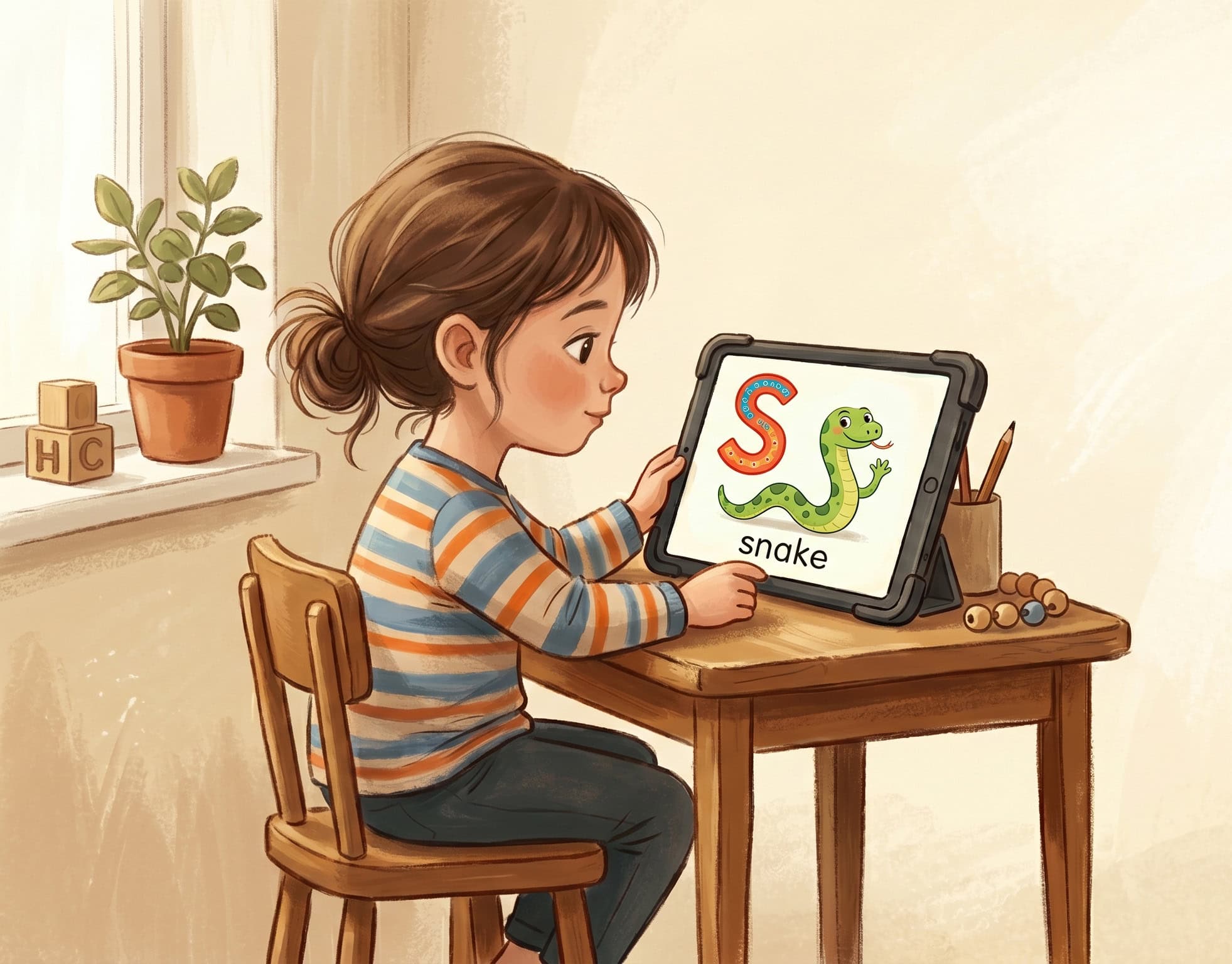
The debate around Science of Reading versus balanced literacy has been building in school policy circles for years, but in 2026 it has landed squarely in the living room. I'm Aris Karavias, a children's book illustrator and educational app developer based in Athens, Greece, with 27 years of experience creating content for young readers. The statistic that stops most parents cold is this: a 2023 Gallup and Learning Heroes survey found that 88% of parents believe their child reads at or above grade level. The 2024 Nation's Report Card tells a very different story: 40% of fourth graders scored below the basic reading level, the highest percentage recorded in decades.
That gap between what parents believe and what national assessments show is exactly why thousands of families are now running short, structured phonics sessions at home every evening. They are not trying to replace the classroom. They are filling a gap the classroom has left, often through no fault of individual teachers, because the system is mid-transition in ways that leave real children in a genuine lurch. These nightly phonics micro-sessions are a practical response to a structural problem, and the research supports them completely.
After building 25+ educational apps on synthetic phonics principles, and as a licensee producing educational content for Disney, Marvel, Warner Bros and Nickelodeon alongside a Disney Creativity Award (2002) and Microsoft AppCampus funding (2014), I have watched this moment coming for a long time. What follows is what I know about running those sessions well.
Every illustration project I take on helps fund the development of autism-friendly educational apps and resources for neurodivergent children. Read about the mission.
What Is the Science of Reading vs. Balanced Literacy Debate Actually About?
Quick Answer: The Science of Reading is a body of peer-reviewed research showing that children learn to decode written language through explicit, systematic phonics instruction, not through context-guessing and immersion. Balanced literacy, which dominated classrooms from the 1990s onward, uses a three-cueing system that encourages children to guess words from pictures, sentence context, and first letters. For most children, and nearly all struggling readers, that guessing approach builds habits that collapse as soon as texts become more complex.
At its core, this debate comes down to one question: how does a child's brain learn to turn printed symbols into language? The Science of Reading answers that question with decades of peer-reviewed research. The most comprehensive evidence comes from the National Reading Panel meta-analysis, peer-reviewed as Ehri, Nunes, Stahl and Willows (2001) in the Review of Educational Research. It found that systematic phonics instruction helped children learn to read better than every other tested method, including whole language, across all socioeconomic groups and ability levels.
This body of research is the foundation of what educators now call structured literacy, the umbrella term for systematic phonics, phonemic awareness, and explicit decoding instruction.
Balanced literacy, popularised in the 1990s and still present in many classrooms, takes a different view. It treats learning to read as a natural process, similar to learning to speak, and assumes that children will absorb reading through rich text immersion and contextual strategies. The three-cueing system at its core tells a child to look at the picture, think about what word makes sense in the sentence, or use the first letter when they hit an unfamiliar word, rather than blending all the sounds from left to right.
The problem is that guessing strategies work well enough for children who already have strong phonemic awareness. For every other child, and there are far more of them than most people expect, those strategies become a habit that falls apart completely once texts stop having helpful pictures and obvious context clues. The child who appeared to be reading fluently in first grade suddenly struggles in third, because they were pattern-matching and predicting rather than truly decoding.
Why Are Parents Running Nightly Phonics Sessions in 2026?
Quick Answer: A rapid policy shift is creating a transitional gap in many classrooms. According to Education Week, as of March 2026, 42 states and Washington D.C. have passed laws or policies requiring evidence-based reading instruction. ExcELinEd data shows 15 states strengthened their early literacy policies in 2024 alone, and by 2025 at least 19 states had banned three-cueing outright. Many children spent two or three years in balanced literacy classrooms and developed compensating habits that a new curriculum cannot undo on its own. Parents are stepping in with nightly phonics micro-sessions to close that gap themselves.
The scale of the policy shift is significant. Education Week's tracker confirmed that as of March 2026, 42 states and Washington D.C. have passed laws or implemented policies requiring evidence-based reading instruction since 2013. ExcELinEd data shows 15 states strengthened their early literacy policies in 2024 alone, and by 2025 at least 19 states had passed outright bans on three-cueing in classrooms. This is one of the fastest shifts in educational policy in decades.
But rapid policy change does not produce rapid classroom change. A school that adopts a new Science of Reading curriculum in autumn 2025 still has a teacher who trained in balanced literacy, who is now learning a different methodology in real time while teaching your child. The gap between policy and practice is real, and parents feel it in the reading logs, the homework responses, and the parent-teacher conferences.
There is also a carry-over problem. A child who spent two years in a balanced literacy classroom has learned strategies: look at the picture, think about what makes sense, use the first letter. Those strategies worked in that context. But they are not phonics. When the classroom shifts, the child has to unlearn the guessing habit at the same time as learning to decode, and that is genuinely harder than starting from scratch. Nightly phonics micro-sessions at home give that child extra practice in the new approach, in a calm, low-pressure environment with one adult and no competing demands.
Science of Reading vs. Balanced Literacy: A Practical Comparison for At-Home Sessions
Quick Answer: For at-home nightly sessions, the Science of Reading framework has a clear practical advantage: it gives parents a structured sequence to follow without specialist training. Balanced literacy is harder to replicate at home because it relies on teacher professional judgment and classroom immersion rather than a repeatable sequence. For children who are behind in reading, the evidence strongly favours structured phonics. Ehri et al. (2001) found systematic phonics produced statistically significant gains over every other method tested, including for struggling readers and across all socioeconomic groups.
If you are deciding which framework to follow for your nightly sessions, this comparison covers what matters most from a practical standpoint as a parent running sessions at home.
| Feature | Science of Reading | Balanced Literacy |
|---|---|---|
| Core method | Explicit, systematic phonics instruction | Immersion in texts, context clues, three-cueing |
| At-home ease | Clear sequence a parent can follow daily | Harder to replicate without specialist training |
| Best for struggling readers | Strongly supported (Ehri et al. 2001, NRP) | Limited evidence for decoding difficulties |
| Neurodivergent learners | Highly effective, especially with multisensory tools | Often insufficient without phonics scaffolding |
| Role of illustration | Illustrations enrich text, do not replace decoding | Pictures used as word-identification cues |
| 2026 policy direction | 42 states now require evidence-based instruction | Being phased out across most U.S. states |
The evidence is not ambiguous. For the nightly at-home sessions parents are running in 2026, the Science of Reading framework gives a clearer path, a more predictable sequence, and better outcomes, particularly for children who are already behind. A 2025 systematic review drawing on 163 peer-reviewed studies published over four and a half decades (MDPI, Education Sciences) confirmed the contribution of systematic phonics to overall reading performance across all six components of foundational reading development.
How to Structure a Nightly Phonics Micro-Session
Quick Answer: A 15-minute session split into four parts covers the core Science of Reading skills without overwhelming a young child: two minutes of phoneme isolation warm-up, five minutes on one grapheme-phoneme correspondence using letter cards or a whiteboard, five minutes reading a decodable text matched to patterns already taught, and three minutes of word-building with magnetic letters or tiles. Repeating that same structure each night builds habit and reduces the friction of getting the session started, which matters as much as what happens during it.
One thing I hear constantly from parents is that they want to help but feel unsure how to actually run a session. After 27 years creating educational content for children, including 25+ apps built on synthetic phonics principles, I can tell you the structure matters as much as the materials. Here is a format that works consistently for children aged 4 to 8:
- Warm-up (2 minutes): Phoneme isolation. Say a word and ask your child to identify the first, middle, or last sound. Keep it fast and low-pressure, not a quiz.
- Phonics instruction (5 minutes): Focus on one grapheme-phoneme correspondence. Use letter cards, a whiteboard, or a sand tray. Blend sounds left to right, out loud, without skipping steps.
- Decodable text reading (5 minutes): Use a book that matches the phonics patterns your child has already learned. When they hesitate at a word, cover the picture and encourage full blending rather than guessing.
- Word building (3 minutes): Use magnetic letters or tiles to build and change words (cat, bat, mat). This reinforces the phoneme-grapheme link through physical manipulation rather than passive recognition.
Fifteen minutes. Consistent. Calm. Research on phonics session duration supports shorter, more frequent sessions for younger children over longer, less frequent ones. The Education Endowment Foundation recommends four to five sessions per week for targeted phonics work, which means a daily nightly session is on the intensive end of the evidence-backed range but appropriate for a child who has a real gap to close.


The Best Phonics Micro-Session Approach by Age Group
Quick Answer: The Science of Reading approach adapts by developmental stage, not just by calendar age. Children aged 3 to 5 need phonemic awareness work before any letter-sound instruction: rhyming, syllable clapping, sound isolation in spoken words. Ages 5 to 7 are in the critical window for systematic grapheme-phoneme instruction with decodable readers. Ages 7 to 9 should have basic blending becoming automatic, with sessions shifting toward fluency, vowel teams, r-controlled vowels, and morphology. Matching session content to the child's actual skill level matters more than matching their age.
Ages 3 to 5: Phonemic Awareness First
Before a child can decode printed letters they need to be able to hear and manipulate sounds in spoken words. This is phonemic awareness, and it is the foundation the Science of Reading builds on. At this age, keep everything oral and playful: rhyming games in the car, clapping syllables in familiar words, "I spy something that starts with the /s/ sound." Read picture books with strong rhythm and repetition. The goal at this stage is ears and mouth, not eyes and page.
Ages 5 to 7: Systematic Phonics and Blending
This is the critical window. Children at this stage need direct, sequential instruction in grapheme-phoneme correspondences, starting with single consonants and short vowels (CVC words: cat, dog, sit), moving to consonant blends and digraphs (bl, sh, ch), then vowel teams. Use decodable readers that contain only patterns already taught. Add multisensory reinforcement: write letters in shaving foam, tap sounds on fingers, use letter tiles. Every unfamiliar word gets blended fully, left to right, not guessed from the picture or context.
Ages 7 to 9: Fluency and Advanced Patterns
By this age, basic blending should be close to automatic. Sessions can focus on more complex orthographic patterns (vowel teams, r-controlled vowels, silent letters), fluency practice with timed passages, and morphology: prefixes, suffixes, and root words. If basic blending is not yet automatic at age 7 or 8, go back to the earlier sequence and work through the gaps systematically. The phonics sequence does not have an age-based expiry date.
Creating a phonics-aligned book for the at-home reading push?
I illustrate children's books specifically for the Science of Reading era: decodable-friendly layouts, clean page design that keeps a child's focus on the text, and illustration that enriches the story without giving away words. See the approach on your actual manuscript before committing to a full project.
Request Your Free Custom SpreadWhy Illustrated Books Still Matter in the Science of Reading Era
Quick Answer: The Science of Reading does not make illustrations less important. It changes how they should function. In a balanced literacy classroom, pictures were used as decoding cues: the child saw a picture of a horse and recognised the word without truly reading it. In a Science of Reading framework, illustrations build vocabulary, background knowledge, and emotional engagement with the story, all genuine components of the reading model. The key distinction is that pictures should enrich the text after decoding, not provide a shortcut around it.
I feel strongly about this after 27 years making books. The shift to the Science of Reading is sometimes misread as a shift away from rich illustration, toward spare, text-heavy decodable books with minimal visual content. That misreads what the research actually says. Vocabulary knowledge and background knowledge are both components of the Science of Reading's Simple View of Reading, and both are built through picture books read aloud, through expressive visual storytelling, through characters children can connect with emotionally.
What changes is the role illustrations play when the child is doing the decoding work. If the picture shows a dog running across a field and the word is "dog," the child should still sound out d-o-g rather than recognise the word from the image. The picture should add to the meaning of the word once decoded, not bypass the decoding step. When I illustrate a book, I think about this carefully at every spread. Visual storytelling should clarify meaning and build emotional connection, not hand the child the word before they have earned it through phonics.
If you are writing a book that needs to support phonics-aligned reading, our children's book illustration services are built with this kind of educational intentionality from the start. You can also read our guide on how to self-publish a children's book if you are taking the independent publishing route.
Nightly Phonics Sessions and Children with Learning Differences
Quick Answer: Children with dyslexia, autism, and ADHD are the learners who suffered most under balanced literacy. The Science of Reading's explicit, structured phonics instruction removes the ambiguity that makes reading so difficult for neurodivergent children: it provides clear rules, predictable sequences, and phoneme-by-phoneme instruction rather than whole-word guessing. For at-home sessions, the adjustments that make the biggest difference depend on the child's specific profile. Autistic children are not a single group with identical sensory needs, and the most effective approach is the one that matches how your child actually processes the world.
This section matters more to me personally than any other in this article, because it sits at the centre of what ReadnLearn was built to do. I am the father of an autistic child with speech delay, and I have spent years watching him engage deeply with some learning experiences and completely disengage from others. Children with dyslexia, autism, ADHD, and other learning differences were the learners most badly served by balanced literacy. Whole-word memorisation and context guessing are particularly difficult for children whose brains process language differently. The Science of Reading's explicit, structured approach is not just better for these children, it is often the only approach that works at all.
One thing I have learned is that "autistic children need calm, minimal environments" is too simple a rule. The autism spectrum includes children who are genuinely overwhelmed by sensory input and need a quiet, uncluttered learning space. It also includes children who are highly drawn to motion, colour, and visual stimulation and who become more engaged, not less, in rich visual environments. Research on sensory processing in autism confirms both profiles are common. The adjustments below are grouped by what they help with so you can apply the ones that fit your child rather than all of them at once.
For at-home nightly sessions with a neurodivergent child, these adjustments make the biggest practical difference:
- Shorten sessions for attention differences: 8 to 10 minutes may produce better outcomes than 15 for children with attention difficulties. End while they are still engaged rather than pushing to a fixed time.
- Use multisensory reinforcement: Touch, movement, and sound reinforce the phoneme-grapheme link across multiple pathways. Letter tiles, sand trays, and tapping fingers on sounds work well for most neurodivergent learners regardless of sensory profile.
- Adapt the visual environment to your child: Some autistic children focus better with clean, simple page design and minimal background detail. Others engage more readily with richer visual environments. Watch which one your child actually attends to, and follow that, not a general rule.
- Follow the sequence strictly: Do not introduce a new phonics pattern until the previous one is fully secure. For many autistic learners, predictability is not just a preference, it is a neurological requirement. Unpredictability actively competes with learning.
- Remove time pressure entirely: Apps or games with countdown timers create cognitive load that directly interferes with decoding for many neurodivergent children. Every interaction should wait for the child to be ready.
- Name every small win specifically: "You decoded that word all by yourself" is more useful than generic praise. A single correctly decoded new word is a genuine achievement worth naming precisely.
When choosing a phonics app to support at-home sessions, look for: a predictable visual environment where nothing appears unexpectedly, non-verbal response pathways that do not require speech production as the only option, and individualised pacing the child or parent controls. The right visual intensity, whether calm or rich, depends on the child. Most mainstream phonics apps apply one visual style to every user. Our ReadnLearn phonics apps are built on synthetic phonics principles with neurodivergent learners specifically considered, including First Words With Phonics, which teaches letter sounds and blending through three adjustable hint levels with clean, uncluttered design, available in English, French, Italian, German, Spanish and Greek for children from the pre-reading stage onward.

What the Science of Reading Shift Means for Children's Book Creators
Quick Answer: Parents running nightly phonics micro-sessions are looking for books that support decoding practice, not books where rich illustration carries the meaning instead of the text. For book creators, this means decodable vocabulary matters, repetitive pattern-based language reinforces what children are practising, clean page design reduces cognitive load, and illustrations express character and emotion rather than labelling objects the child should be decoding. These are design decisions that need to be made at manuscript stage, not added at the illustration phase.
If you are an author or illustrator creating books for young readers in 2026, the at-home phonics movement changes what parents are actively looking for. They want books they can use during an evening session: controlled vocabulary, patterns their child has learned, and illustrations that add meaning without giving away words. A book that was written without thinking about decodability can still be a wonderful read-aloud, but it does not function well as a phonics practice tool.
The books that work best for nightly sessions have a clearly stated phonics scope and sequence, repetitive pattern-based language that reinforces the grapheme-phoneme mappings the child is practising, illustrations that express character and emotion rather than simply labelling objects, and simple, clean layouts without competing visual information. These are deliberate design choices, not accidents, and they require a collaborator who understands how reading development actually works at each stage.
Our educational content integration service works with authors who want their books to do more than tell a story. If you want to see how a phonics-aligned approach translates into actual illustrated spreads, the best starting point is a free custom spread request, where I illustrate one full page of your actual manuscript at no cost so you can evaluate the approach before committing to a full project.
Common Mistakes Parents Make During Nightly Phonics Sessions
Quick Answer: The most common mistake is carrying balanced literacy habits into a Science of Reading session: asking "what does the picture tell you?" instead of "sound it out." Other frequent errors include skipping phonemic awareness work to get to "real reading" too quickly, using books that are too difficult for the child's current decoding level, making sessions too long or too stressful, and switching methods mid-sequence on a hard night. Each of these undermines the cumulative progress that consistent structured phonics builds over weeks.
Letting children guess from pictures
This is the most common balanced literacy habit to carry over into home sessions. When your child hesitates at a word, the Science of Reading response is: cover the picture and sound it out, left to right, without shortcuts. The urge to say "what does the picture tell you?" feels supportive in the moment, but it reinforces the guessing habit the structured approach is working to replace.
Skipping phonemic awareness to get to books too quickly
Many parents want to reach actual reading as fast as possible. But if a child cannot yet segment and blend sounds in spoken words, decoding printed words will be frustrating for both of you. A few weeks of purely oral phonemic awareness work, with no letters involved at all, builds the foundation that makes letter-sound instruction click much faster once you introduce it.
Using books that are too hard
For a phonics micro-session, your child should be able to decode at least 90 to 95 percent of words independently. If they are struggling with more than one word in ten, the text is too difficult for a decoding practice session. Save harder books for read-aloud time, where you handle the decoding and they focus on comprehension and enjoying the story. Difficulty is appropriate for read-aloud. It is not appropriate for independent decoding practice.
Making sessions too long or too stressful
Fifteen minutes is enough. A child who finishes a session feeling successful will come back willing to try again tomorrow. A child who ends in tears has learned that reading at home is something to dread. If the session is going badly, stop early. Lower the difficulty for next time. Progress measured over weeks matters far more than what happens on any single night.
Switching methods mid-sequence
The Science of Reading at-home approach works because it is systematic and cumulative. Pick a phonics sequence and follow it consistently. Do not mix in picture-based guessing strategies because your child is having a hard night. Stay in the structure, lower the difficulty level, and keep the sequence intact. Consistency across sessions is what produces the gains.
Resources and Tools That Support the Science of Reading At-Home Push
Quick Answer: A 2025 peer-reviewed quality appraisal of 309 phonics apps (Furlong et al., Early Childhood Education Journal) found fewer than 28% met basic standards for educational quality, with nearly 1 in 5 rated poor. Most prioritise entertainment over instructional integrity, lack a systematic phonics sequence, and embed no genuine explicit teaching within their gameplay. Parents need to go beyond App Store ratings and check whether an app actually teaches phoneme-grapheme correspondences in a logical sequence, provides corrective feedback, and includes blending and segmenting as distinct activities.
The market for phonics resources has grown fast in response to the Science of Reading policy shift, but quality is uneven. The Furlong et al. (2025) study in the Early Childhood Education Journal is the most rigorous quality appraisal of phonics apps conducted to date: of 309 apps evaluated using the Mobile Application Rating Scale, fewer than 28% met standards for educational quality and nearly 1 in 5 were rated poor. Most apps on the market are entertainment products with a phonics theme, not genuine instructional tools built on evidence-based teaching principles.
Decodable book series
Look for series with a clearly stated phonics scope and sequence on the publisher's website. The best decodable series introduce new patterns one at a time, review previous ones consistently across books, and do not include words the child has not yet been taught to decode. If the publisher cannot tell you exactly which phonics patterns appear in a given book, that is a meaningful warning sign about whether the series was written with phonics instruction in mind or just phonics branding.
Phonics apps with genuine synthetic phonics methodology
High-quality phonics apps, according to Furlong et al. (2025), share specific characteristics: explicit instruction where the app demonstrates rather than just quizzes, a systematic sequence of phoneme introduction in an evidence-based order, immediate corrective feedback, spaced repetition of previously learned phonemes, and blending and segmenting as distinct activities rather than as incidental game mechanics. Our ReadnLearn phonics apps are built to these principles from the ground up. First Words With Phonics teaches letter sounds and blending from the pre-reading stage, with three adjustable hint levels and versions in six languages (English, French, Italian, German, Spanish and Greek), making it one of the only synthetic phonics apps covering this language range for children aged 2 to 6. For information on how an illustrated book can become a fully interactive phonics learning tool, see our book-to-app conversion services.
Letter-sound cards and manipulatives
Physical letter tiles, magnetic letters, and sound-sorting cards give children a tactile experience with phoneme-grapheme mappings that screen-based tools alone cannot fully replicate. For children who are multisensory learners, and for autistic children who benefit from concrete, predictable objects, physical manipulatives are not optional extras. They are core tools that reinforce what the app or the book is teaching.
Professionally illustrated educational books
Books that pair clear phonics-aligned text with illustrations that build vocabulary and emotional engagement give children both the decoding practice and the reading motivation they need to keep going over weeks and months. If you are looking for guidance on how to hire a picture book illustrator who understands the Science of Reading context, our publishing guides walk through the practical side of that process.
Key Takeaways
- The Science of Reading is backed by the most comprehensive evidence base in reading research history, anchored by the NRP meta-analysis (Ehri et al., 2001), which found systematic phonics outperformed every other reading instruction method tested, including whole language, across all ability levels.
- As of March 2026, 42 states and Washington D.C. have passed laws or policies requiring evidence-based reading instruction. The rapid policy shift is creating a real transitional gap in many classrooms that consistent at-home sessions can help close.
- The 2024 Nation's Report Card found 40% of fourth graders scored below the basic reading level, the highest percentage in decades, the precise gap parents are responding to with nightly phonics practice.
- A consistent 15-minute at-home session split into warm-up, instruction, decodable reading, and word-building covers the core Science of Reading skills without overwhelming young children. Consistency across nights matters more than session length on any given night.
- A 2025 peer-reviewed study (Furlong et al.) found fewer than 28% of phonics apps meet basic educational quality standards. Look for apps with explicit instruction, systematic sequence, corrective feedback, and blending as a distinct activity rather than entertainment mechanics.
- Children with dyslexia, autism, and ADHD need the Science of Reading's structured approach most. Autistic children are not a single group — sensory profiles vary significantly across the spectrum. Predictable environments and no time pressure are universal requirements. The right visual intensity depends on the individual child, not on a general rule about what autistic children need.
- Illustrations remain vital in the Science of Reading era, but their function shifts: they build vocabulary, background knowledge, and emotional engagement with the story rather than serving as word-identification cues that bypass decoding.
Frequently Asked Questions
Is the Science of Reading better than balanced literacy for at-home phonics sessions in 2026?
For nightly at-home sessions, the Science of Reading framework is significantly more effective. It gives parents a clear, sequential structure to follow without specialist training, and it is backed by the strongest research base in reading instruction history, including the NRP meta-analysis (Ehri et al., 2001) which found systematic phonics outperformed every other tested method. Balanced literacy is harder to replicate at home and has weak evidence specifically for children who struggle with decoding.
How long should nightly phonics micro-sessions be for a 5-year-old?
For a 5-year-old, 10 to 15 minutes is appropriate for at-home nightly practice. Research on phonics instruction supports shorter, more frequent sessions for younger children rather than longer, less frequent ones. The Education Endowment Foundation recommends four to five sessions per week for targeted phonics work. End the session before your child becomes fatigued, and if they are still engaged at 15 minutes, stop anyway. Ending on a successful moment matters more than covering additional material.
What is a phonics micro-session and how do parents run them at home?
A phonics micro-session is a short, focused block of structured phonics practice, typically 10 to 15 minutes, led by a parent at home each evening. In the Science of Reading framework, a session covers a phoneme awareness warm-up, direct instruction on one grapheme-phoneme correspondence, reading practice in a decodable text, and word-building with letter tiles or magnetic letters. The session follows the same four-part structure each night to build habit and predictability, which is particularly important for children with learning differences.
Can I run Science of Reading phonics sessions at home if my child's school still uses balanced literacy?
Yes, and in 2026 this is exactly what many parents are doing. Your at-home sessions using a Science of Reading approach will not confuse your child. They will provide the explicit decoding foundation that balanced literacy programmes often leave incomplete. Over time, a child with a strong phonics grounding from home sessions will have stronger decoding skills regardless of what the classroom is using, and those decoding skills transfer directly into reading comprehension as texts become more complex.
What phonics sequence should I follow for at-home sessions?
The standard Science of Reading sequence starts with single consonants and short vowels (CVC words: cat, dog, sit), moves to consonant blends and digraphs (bl, sh, ch), then to vowel teams (ea, oa, ai), r-controlled vowels (ar, or, er), and finally complex orthographic patterns. Introduce one new pattern at a time and practise it until it is fully secure before moving forward. Many decodable book publishers publish their full scope and sequence on their website, which gives you a ready-made roadmap without needing to build one yourself.
Are there Science of Reading phonics apps designed for children with autism or learning differences?
Yes, though genuine autism-inclusive design is rare in the phonics app market. Most mainstream apps treat accessibility as an afterthought rather than building it into the core product from the start. Our ReadnLearn apps are built on synthetic phonics principles with neurodivergent learners in mind. First Words With Phonics uses adjustable hint levels, clean uncluttered design, and letter-sound instruction without time pressure, available in six languages for children from the pre-reading stage onward.
Is it too late to start Science of Reading phonics sessions if my child is already 7 or 8?
It is not too late. The Science of Reading framework applies to any reader who has gaps in phonics knowledge, regardless of age. For a 7 or 8 year old, assess which phonics patterns are not yet automatic and start your sessions at that point in the sequence rather than at the very beginning. Keep sessions paced for an older child's attention span, and focus on fluency and accuracy in the specific gap areas. Children who missed systematic phonics instruction can catch up, and consistent structured sessions at home are one of the most effective ways to help that happen.