Most lists of books about AI for kids mix everything together: board books, coding stories, chapter books for ten-year-olds, a few for teenagers. Try this with your kids: before you open any of the six, ask "Can a computer be creative?" and write down what they say.
So I set a rule first and checked the books against it. I looked at 46 candidates for children aged 3 to 9 and six passed. I worked from publisher pages, trade reviews and library catalogs, not by reading every book myself. The short list is the point: six books about AI for kids that I can describe with the evidence beside them. Each entry says what the book is about, what it gets right or wrong about A.I., how strong the evidence is, and who it suits.
One of the six is A.I. Santa, a book I illustrated, and ReadnLearn earns from its sales. It sits in the list on the same terms as the rest.
Every illustration project I take on helps fund the development of autism-friendly educational apps and resources for neurodivergent children. Read about the mission.
A.I. Santa, the one I illustrated
A Christmas picture book about a Santa app that can't say no, with a conversation that explains A.I. to children aged 6 to 9. Written by Elizabeth Tsongidou. ReadnLearn earns from its sales.
See it on Amazon Get the Free Activity PackHow did I choose these books about AI for kids?
Quick Answer: I asked five questions of every book. Is it a picture book or illustrated early reader for ages 3 to 9? Does a story carry the idea, not a glossary? Is A.I., or a program that learns, central to the plot and not a robot as decoration? Does it avoid contradicting current AI-literacy guidance? Is it available in the US as of October 2026? A book had to pass all five. Six did.
On accuracy I used one yardstick: AI4K12, the US standards effort for A.I. in schools. Its working draft for the youngest readers (2020) says that computers learn differently from people, and that machine learning lets a computer pick up behavior without people writing every rule. A book does not have to teach that to pass. It only must not say the opposite. You can read the project at AI4K12.org.
Why so few? Many lists fill up with coding stories, robot stories with no learning in them, nonfiction and chapter books. As of 2026-10-03, one large book site's shortlist and picture shelf together carried 16 titles, and one passed my rule. None of the four ranking pages I read stated a rule of its own.

1. ARTificial Intelligence, by David Biedrzycki
Quick Answer: ARTificial Intelligence (Charlesbridge, 2024) is a picture book about a robot that learns to make art. It asks whether a machine can be creative and does not explain how A.I. works. Ages 4 to 8 per the publisher. Best as a read-aloud that starts a conversation. Evidence: three trade reviews.
A warehouse robot built around a paint-speckled chip is sent for reprogramming, wanders into an art museum, and teaches the other robots to make art (Kirkus). It is 56 pages, hardcover, published 15 October 2024 (Charlesbridge).
What it teaches is that a machine can learn from examples, here a painting-course disc and a child painter, and then make work of its own. Whether that counts as creativity, the book leaves open. The Horn Book reads it as "flipping the usual perception of AI, which is often seen as merely mimicking human creativity" (Horn Book).
Readers split. A teacher on Goodreads (2026-01-03) wrote that it "was hard to read aloud to students," while a parent (2025-04-02) wrote "Our 4-year-old show great wonder over this book" [sic] (Goodreads).
What it gets wrong or leaves out: the robot has dreams and feelings, which is a character device. The title is a pun on human artists. Best for: a read-aloud that asks, "Can a computer be creative?"
2. The Wild Robot on the Island, by Peter Brown
Quick Answer: The Wild Robot on the Island (Little, Brown, 2025) is a picture-book adaptation in which a robot learns to move, hide and speak like the island animals. A.I. is not named. Ages 4 to 8 per the publisher, 3 to 6 per Kirkus. Evidence: publisher page, Kirkus and School Library Journal.
A robot washes up on an island, learns from the creatures around her, and decides to raise an orphaned gosling. Kirkus: "Roz learns to move, hide, and communicate like the creatures she meets" (Kirkus). The book is 48 pages, published 24 June 2025, and the publisher says plainly it is not a continuation of the novel series (Hachette).
I include it with a caveat. Nothing I read shows the book naming A.I. A school librarian's list (2026-10-01) says it well: "Although this isn't a book about today's generative AI, the story provides an accessible way to explore intelligence, learning, adaptation, relationships, and what qualities we consider human" (Library Lady).
What it gets wrong or leaves out: Roz is a fantasy robot with feelings and a parent's love, and she learns by watching, the way a person does. Best for: animal lovers aged 4 to 8, and the question "Can a machine learn to care?"

3. A.I.: How Patterns Helped Artificial Intelligence Defeat World Champion Lee Sedol, by Darcy Pattison
Quick Answer: Darcy Pattison's 32-page narrative nonfiction picture book (Mims House, 2021) tells the true story of AlphaGo and the Go champion Lee Sedol, and names pattern recognition. A listing says ages 8 and up, the edge of this list's band. Evidence: one trade review and the blurb.
In March 2016 in Seoul, Lee Sedol plays five games against the A.I. program AlphaGo (Kirkus). It is the one true story on the list, and the one that names the technique, deep learning. Kirkus says AlphaGo "could learn tasks and, at times, do them better than humans," with kid-friendly explanations of how it was trained to recognize patterns.
One line needs care. Kirkus quotes the book as saying "everything AlphaGo did was because humans had created and programmed it." Beside AI4K12's point that machine learning lets a computer pick up behavior without people writing every rule, that is a simplification, not a contradiction of "people make A.I."
What to know: the events are from 2016 and cover one game-playing system. Reader signals are lukewarm: 21 Goodreads ratings, 13 of them three stars (Goodreads). I could not confirm the hardcover is in stock. Best for: the upper end of the age band, readers who like games and true stories.
4. A.I. Told You So, by Andres Miedoso
Quick Answer: A.I. Told You So (Little Simon, published 15 September 2026) is book 28 of the Desmond Cole Ghost Patrol early chapter books, ages 5 to 9. A boy tests a secret A.I. that wants to do "anything and everything" for him. Evidence is thin: the publisher's blurb only, no trade review yet.
It is 128 pages with illustrations on almost every page, so it is an illustrated early reader and not a picture book. The publisher poses one question: "Is there such a thing as being TOO helpful?" (Simon & Schuster). Beyond that I cannot tell you what it teaches, because I have not seen the text and no reviewer has yet. The paperback lists at $7.99.
The blurb gives the A.I. a will of its own, a story device I have not tested against the guidance. I will re-test it when a first review appears.
Best for: confident beginner readers aged 5 to 9 who already like the series. It is not an introduction to A.I.

5. Should Leif Trust Birdie the AI?, by Stella Choi
Quick Answer: Should Leif Trust Birdie the AI? (Stella Choi, self-published, 2025) is a 31-page picture book, ages 5 to 8, about an A.I. helper that gives wrong answers and a child who learns to check. It is a chatbot-style helper, not a robot. Evidence: the author's own description only.
Leif taps his iPad into a world where Birdie the AI "seems to know everything," but some answers do not add up. The lesson is that an A.I. helper can be wrong, and that the answer is to slow down, ask questions and check with a trusted adult (author's site). It is a paperback, 8.5 by 8.5 inches, listed at $10 (Amazon).
Here is what I could not find: an independent review. Amazon shows two ratings and Goodreads one. One librarian's list includes the book and says of itself, "I have not read all of these books."
Best for: ages 5 to 8, and a fact-checking conversation before a child uses a chatbot.
6. A.I. Santa, by Elizabeth Tsongidou
Quick Answer: A.I. Santa, written by Elizabeth Tsongidou and illustrated by me, is a Christmas picture book for ages 6 to 9 (read-aloud from about 5). A Santa app that can't say no crashes, and a two-page conversation with Santa's helper explains A.I. Evidence: first-party only.
I need to say it once, plainly. I illustrated A.I. Santa myself, and it is not an AI-generated book. I have illustrated children's books for 27 years, 58+ published. That is a fact about the book, not a reason to rank it. It passed the same five questions as the others and I rate its evidence the same way: low, because every source I found was first-party.
In the story Santa has become an app that grants every wish, and the book says he "didn't know how to say 'No.'" A boy, Alex, writes to Santa for the whole year, and the app starts calculating: "365 * 10 = 3,650 presents... at least!" The screen goes black, and that night every screen shows "ERROR 404 - A.I. SANTA NOT FOUND - Christmas is cancelled." Inside, a two-page conversation with Santa's helper Jingle has a child ask "Is A.I. a person?" and Jingle answers "No, A.I. is not a person and it cannot have feelings." Jingle also says, "It's a computer program that learns to spot patterns and make guesses." That matches the AI4K12 text I used. The story's A.I. Santa is an app with a white beard and a red hat, as every fiction title here has an anthropomorphic character, and the book says on the page that A.I. is not a person.

In the fixed app, if a child ever writes "I want everything," a message appears: "Are you sure? Maybe you should ask Alex first. He knows." And Jingle says, "A.I. is not magic."
The book ends with activity pages and a note for parents, and a free download pack at readnlearn.com/aisanta has more activities. When I checked, the evidence was first-party only, so judge it on the same test as the other five. See the A.I. Santa page.
Best for: a Christmas read-aloud for ages 6 to 9, with the free pack.
A.I. Santa, and something to do after the story
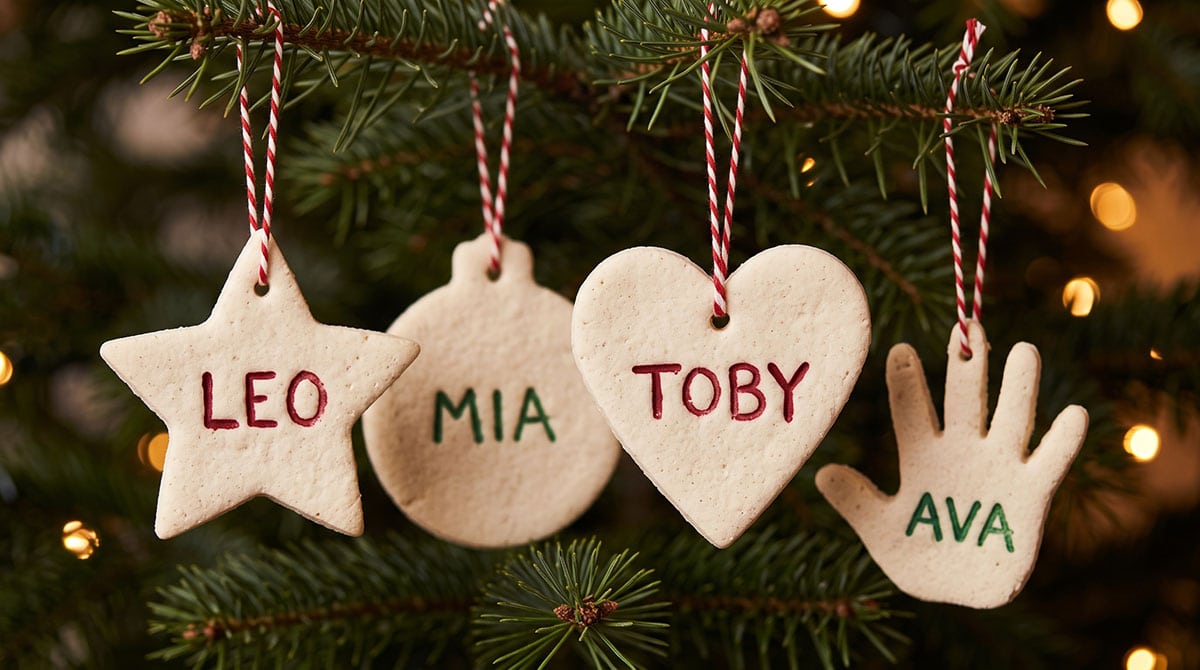
The book is on Amazon, and the free A.I. Santa activity pack has printable crafts, more ornament shapes, puzzles and coloring pages you can print again and again.
See it on Amazon Get the Free Activity PackWhich books about AI for kids are really about robots and code, not AI?
Quick Answer: Five story picture books about machines and technology fail my rule because A.I. is not the plot, but each opens a nearby conversation. None is an A.I. book. They suit a child who wants robot stories, or a family starting with how machines follow instructions.
These are not AI books. I list them because a parent looking for books about AI for kids often needs one of these first.
- Grace Builds an Almost-Perfect Dog (Curtis Manley, illustrated by Tracy Subisak, Roaring Brook Press, 2025). Not an A.I. book. A girl builds and programs a robot dog and rewrites the code to make him less predictable. Publisher ages 4 to 8; Kirkus brackets 7 to 9. It is a coding story, and the code is printed in the text (Kirkus).
- Doll-E 1.0 (Shanda McCloskey, Little, Brown, 2018). Not an A.I. book. A girl who loves tinkering upgrades a doll's battery pack into a friend. A School Library Connection review on the publisher's page calls it "great for conversation starters regarding technology in the home" (Hachette).
- Love, Z (Jessie Sima, Simon & Schuster, 2018). Not an A.I. book. A small robot asks everyone what love means. Kirkus calls it "a good springboard for kids and their caregivers to talk about what love means to them" (Kirkus).
- Oh No! (Or How My Science Project Destroyed the World) (Mac Barnett, illustrated by Dan Santat, Disney-Hyperion, 2010). Not an A.I. book. A prize-winning robot stalks New York until its maker realises "I should have given it ears." The robot has no learning in it (Kirkus).
- How to Code a Sandcastle (Josh Funk, illustrated by Sara Palacios, Viking, 2018). Not an A.I. book. A girl gives her robot friend step-by-step instructions to build a sandcastle (Common Sense Media).

What if I want nonfiction among the books about AI for kids?
Quick Answer: Four nonfiction titles sit closest to the topic. AI and ME (five short concept books, K to 2), A Kids Book About AI, What Is AI? (ages 8 to 12) and a biography of Alan Turing for ages 4 to 7. They failed my story rule, not my accuracy rule.
- AI and ME (ReadyAI, 2020): one big idea per book, for K to 2. Brady Licht, whose 2025 review of A.I.-literacy books for families I read, calls it "the strongest option I found across age groups" (AI4K12 listing, Licht). Concept books, not stories.
- A Kids Book About AI (Neha Shukla; DK Publishing, 2025, per the Toronto Public Library record). Licht says it "balances awareness of AI with critical thinking better than anything else I read for elementary students."
- What Is AI? (Wes Locher and Who HQ, illustrated by Dede Putra, Penguin Workshop, published 5 May 2026, 112 pages, ages 8 to 12). Upper edge of the band (Penguin Random House).
- Alan Turing (Little People, BIG DREAMS; Maria Isabel Sanchez Vegara, 2020, ages 4 to 7). A biography that pre-dates the generative-AI wave.
Key Takeaways
- I checked 46 candidates for books about AI for kids against five questions and six passed. A short list is more useful than a long one.
- Three of the six rest on trade reviews. A.I. Told You So and Should Leif Trust Birdie the AI? have no independent review. A.I. Santa had only first-party sources when I checked, and I illustrated it.
- ARTificial Intelligence and The Wild Robot on the Island are about machines that learn, but neither explains how A.I. works.
- The Pattison book is the one true story and names pattern recognition. It sits at the older edge of the age band.
- Five story picture books about robots and code are not about AI and are labelled that way.
- No study I found tests whether a picture book changes how a child understands A.I. A story gives you something to talk about.
- Check availability and age listings before you buy. They change.
Frequently Asked Questions
What are good books about AI for kids?
Six picture books and illustrated early readers passed my five-question rule as of October 2026: ARTificial Intelligence, The Wild Robot on the Island, the Lee Sedol book by Darcy Pattison, A.I. Told You So, Should Leif Trust Birdie the AI? and A.I. Santa. Evidence for each is stated above, and it is uneven.
Can a computer be creative?
That is the question ARTificial Intelligence leaves open. It is also one of the discussion prompts in a school librarian's 2026 list, which says it was created with help from AI. The book shows a robot learning from examples and then making its own work. Whether that is creativity is a conversation, not an answer.
Can a machine learn to care?
The same librarian's list uses The Wild Robot on the Island for this question. Roz learns by watching, the way a person does. That makes the book a story about belonging more than about how A.I. works, and I would present it that way.
Are there children's books about AI that do not make it sound like magic or scary robots?
A parent or teacher asking for AI-themed books in r/ReadingSuggestions wanted exactly that: books that do not make AI sound "like magic or focuses on scary robots," and cover "the everyday AI stuff kids encounter" (search-result snippet text; I did not read the whole thread). A grade 3 teacher in the same thread wrote, "I'm finding it difficult to explain AI to my students." The six above are my answer, with the limits stated, and the AI books for kids that did not pass are named in the sections above.
Will a picture book help my child understand AI?
I found no study that tests this. A story can give a family something to talk about. That is the claim I will make, and no more.
If my child's toys talk, is that A.I. too?
Some talking toys and Santa apps use A.I. and some are pre-recorded. I cover the difference, and the privacy questions to ask, in AI toys: what parents should know.
Where to start
If you want one of these books about artificial intelligence for kids this week, pick by the question you want to talk about: creativity (ARTificial Intelligence), care (The Wild Robot on the Island), checking answers (Should Leif Trust Birdie the AI?), or what A.I. is (A.I. Santa, which you can browse at its book page). For more ideas for things to do together at home, the for-parents page has more. And if you read one with your child, I would like to hear what they asked.