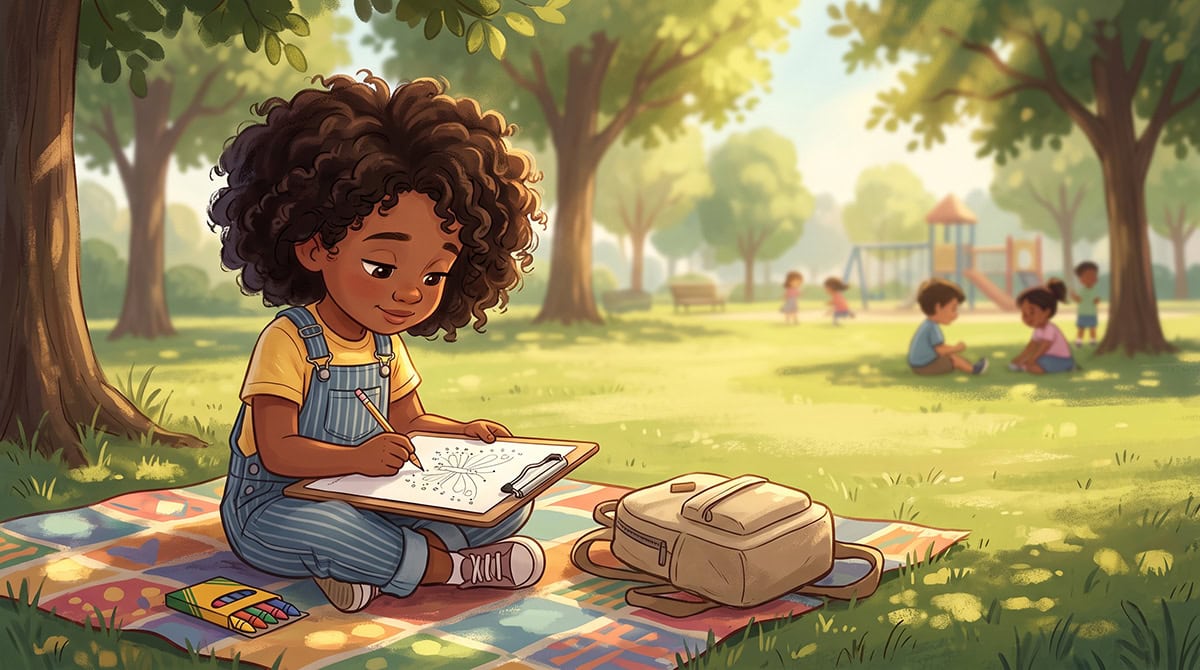
Dot-to-dot printable activity pages are one of the simplest tools I still trust after 27 years of creating learning content for children. They look like nothing more than numbered dots on a page, and that is exactly why so many parents and teachers overlook what they actually do.
Simple idea. Real skill-building underneath. I have designed these both for books and for apps, and the structure matters more than people think. A page is not just dots. It is sequencing, pacing, visual reward, and cognitive scaffolding. Done right, a child is not just connecting numbers, they are building a mental map.
ReadnLearn's work helps fund the development of autism-friendly educational apps and resources for neurodivergent children. Read about the mission.
What Are Dot-to-Dot Printable Activity Pages for Kids?
Quick Answer: Dot-to-dot printable activity pages are worksheets where children connect numbered dots in sequence to reveal a picture. They combine number recognition, counting practice, and fine motor control into one simple page, which is why teachers and parents keep reaching for them across every age group from preschool through the early grades.
They look simple. They are not simple.
I've worked with printable pages inside both books and apps, and the design choices behind a good one are easy to miss. Spacing, number range, and image complexity all have to match the child in front of you, not a generic template.
What Skills Do Dot-to-Dot Printable Activities Build?
Quick Answer: Dot-to-dot activities build number recognition, counting fluency, fine motor control, pencil grip stability, and visual prediction. Children see numbers as a working sequence instead of isolated symbols, and the physical act of guiding a pencil from one number to the next strengthens the same motor skills that later support handwriting.
- Number recognition, seeing 1 to 20 or 1 to 100 as a sequence, not isolated symbols
- Counting fluency, especially forward progression without skipping
- Fine motor control, guiding a pencil with intention
- Pencil grip stability, which directly affects handwriting later
- Visual prediction, guessing what the image will become
For a general sense of when fine motor skills like pencil control typically develop, the CDC's developmental milestone checklists are a useful reference point for parents. NAEYC's broader early math resources cover the number-sense side of what these pages build.
This is why I still include these pages inside larger activity books.

Dot-to-Dot Printable Activity Pages by Age Group
Quick Answer: The right dot-to-dot page depends entirely on age. Preschoolers need 1 to 10 with large spacing, kindergartners handle 1 to 20 or 1 to 30 with recognizable objects, grades 1 to 2 move into 50 or 100 with skip counting, and grades 3 to 5 can take on 150 or higher with hidden images and real problem-solving built in.
This is where most printable packs fail. They mix levels. Age matters. Number range matters. Visual density matters.
Preschool (Ages 3-4)
Start small. Always.
- Numbers: 1 to 10
- Large spacing between dots
- Clear, simple shapes (a house, a flag, a lantern)
At this stage, success is finishing the page, not perfection. For neurodivergent learners, I remove time pressure completely. No timers. No pressure.
Kindergarten (Ages 4-6)
This is the peak demand group, and for good reason.
- Numbers: 1 to 20 or 1 to 30
- Recognizable objects (animals, vehicles)
- Light challenge, but still achievable in one sitting
This is where confidence grows fast.
Grades 1-2 (Ages 6-8)
Now we increase complexity.
- Numbers: up to 50 or 100
- More detailed shapes
- Introduce skip counting (2s, 5s)
This is where these pages start blending into math learning.
Grades 3-5 (Ages 8-10)
Older kids still enjoy these. The trick is sophistication.
- Numbers: 1 to 150 or higher
- Complex illustrations
- Hidden images and puzzles
At this stage, it becomes problem-solving, not just tracing.
How Do You Choose the Right Difficulty Level?
Quick Answer: Use a simple rule: if a child quits halfway, the page is too hard. If they finish in 30 seconds, it is too easy. The right difficulty sits between 3 and 8 minutes of completion time, with a visible reward shape emerging early and clear numbering with no visual clutter.
What I look for when designing these pages:
- Completion time between 3 to 8 minutes
- A visible reward shape emerging early
- Clear numbering with no visual clutter
This is not theory. This comes from watching real children work through pages.
Want Pages Built This Way?
Sophia's Treasure Hunt is a free 24-page printable pack, graded exactly the way this article describes: 1 to 10 up to 1 to 150, so one pack works from preschool through grade 4. Every page asks a question, and connecting the dots answers it.
Get the free packWhy Printable Dot-to-Dot Activities Still Matter in 2026
Quick Answer: Printable pages still dominate in homes and classrooms because they are immediate, flexible, and distraction-free. Even where parents and teachers first discover activities online, most still print the page and hand over a pencil. The download is just the delivery step. The real engagement happens on paper, not on a screen.
People assume everything moved to screens. Not true.
Printable pages still dominate because they are immediate, flexible, and distraction-free. There is also a practical reason. Parents print. Teachers photocopy. Kids engage.

How Teachers Use Dot-to-Dot Printable Activity Pages in Classrooms
Quick Answer: Teachers use dot-to-dot pages for morning warm-ups, learning centers, math reinforcement, and calm-down activities. They scale easily, since one page can serve multiple ability levels with small adjustments to spacing and number range, which makes them practical for mixed-level classrooms without extra prep work.
The classroom usage patterns I see stay consistent across every setting I have designed educational content for.
- Morning warm-up, quiet, focused start
- Learning centers, independent work station
- Math reinforcement, especially counting sequences
- Calm-down activity, low-pressure engagement
Teachers like them because they scale easily. One page can serve three different levels with small adjustments. For more structured counting-game ideas, NAEYC's guide to number and counting games is a solid classroom resource alongside these pages.
How I Design Dot-to-Dot Printable Activity Pages
Quick Answer: Good dot-to-dot design is a visual system, not random dot placement. It means character-first design so the final image feels rewarding, even spacing for motor consistency, and a progressive reveal so the child sees the picture forming early. For print, it also means respecting bleed, trim, and safe margins.
This is where experience shows. I don't place dots randomly. I design them as part of a visual system.
- Character-first design, the final image must feel rewarding
- Even spacing for motor consistency
- Progressive reveal, so the child sees the picture forming early
When I integrate these into books, I also think about print. Bleed, trim, safe margins. If a dot sits too close to the edge, it gets cut, and that ruins the activity. Most printable packs ignore this.
There is one more constraint most packs miss, and it decides whether a page works at all. The dots trace the outline, so the outline is the puzzle. A circle needs twelve dots before it looks round, which is why a 10-dot page has to be something angular like a lantern or a flag, and why a dolphin belongs at 100. Match the shape to the count, not the count to the shape.
Where Dot-to-Dot Printable Activities Fit in a Bigger Learning System
Quick Answer: Dot-to-dot activities work best as one step in a sequence: trace numbers, connect dots, color the image, then name or describe it. Treated as a standalone worksheet, a page teaches counting. Treated as part of a sequence, the same page builds counting, motor control, color recognition, and language together.
- Trace numbers
- Connect dots
- Color the image
- Name or describe it
This is exactly how I structure activity books. If you are building your own collection, or looking for more structured, age-based resources, start with the activity books for kids guide. Structure removes the guesswork.

Free Dot-to-Dot Printable Activity Pages for Kids
Quick Answer: Sophia's Treasure Hunt is a free 24-page dot-to-dot pack, graded from 1 to 10 up to 1 to 150 so it works from preschool through grade 4. Every page asks a riddle and connecting the dots answers it, which gives a child a reason to start rather than a page of numbers.
Parents need immediate tools, not a waiting list. No complexity either.
The pack follows an owl called Sophia on a treasure hunt. She needs a key, a lantern, a compass and a boat before she can go, and every one of them is a page. The pages get harder as the story moves, which is what keeps one pack useful across a four-year age span instead of only one.
Print it in US Letter, black on white, so it does not drink ink. This is not theory. It works.
Conclusion
These pages look simple, but they sit at the intersection of motor skills, early math, and visual learning. Done well, they build confidence. Done poorly, they frustrate.
I've spent 27 years and 58+ published books designing activities that children actually finish, and that is the real metric that matters.
If this mission resonates with you, especially if you are raising or teaching a child who learns differently, take a look at the autism educational tools mission.
Start With the Free Pack
Twenty-four pages, graded by number range, with a riddle on every page and an answer key at the back. Print as many copies as you like, at home or in a classroom.
Get Sophia's Treasure HuntKey Takeaways
- Dot-to-dot printable activity pages build number sequencing, counting fluency, fine motor control, pencil grip stability, and visual prediction, not just "connecting dots."
- Match the number range and visual complexity to the child's age: 1 to 10 for preschool, 1 to 20 or 1 to 30 for kindergarten, up to 50 or 100 for grades 1-2, and 150 or higher for grades 3-5.
- The dots trace the outline, so the shape has to suit the count. Angular objects work at 10 dots, curved ones need 50 or more.
- A well-designed page takes 3 to 8 minutes to complete. If a child quits halfway, it is too hard. If they finish in 30 seconds, it is too easy.
- Printable pages remain widely used in homes and classrooms because they are immediate, flexible, and distraction-free, even when the activity was first discovered online.
- Teachers use them for morning warm-ups, learning centers, math reinforcement, and calm-down activities, and one page can serve multiple ability levels with small adjustments.
- Good design accounts for print bleed, trim, and safe margins so no dot gets cut off at the edge.
Frequently Asked Questions
What age are dot-to-dot printable activity pages best for?
Dot-to-dot printable activity pages work best from ages 3 to 10 when matched to the right number range. Younger children need 1 to 10, while older kids can handle 1 to 100 or more.
Are dot-to-dot activities good for learning numbers?
Yes, they reinforce number order and counting in a practical way. They also improve recall because the child uses numbers in sequence, not isolation.
How do I print dot-to-dot printable activity pages correctly?
Use standard letter size (8.5 x 11 inches) and make sure margins are not cropped. Always preview before printing so no dots are cut off.
Can teachers use dot-to-dot printable activity pages in classrooms?
Yes, they are widely used for learning centers, quiet time, and skill reinforcement. They adapt easily to mixed ability groups.
What makes a good dot-to-dot activity design?
Clear numbering, balanced spacing, and a rewarding final image. If the picture looks appealing, children are far more likely to complete it.
Are printable activities still relevant compared to apps?
Yes. Printable pages offer focus without distractions, while apps add interactivity. The best systems combine both approaches.
Where can I find high-quality dot-to-dot printable activity pages?
Sophia's Treasure Hunt is a free 24-page pack graded by number range, and you can download it here. For more age-based resources across every activity type, start with the activity books for kids guide.